
- What’s Normal for Newborn Skin
- Signs Worth Raising With Your Pediatrician
- A Simple Bath Routine
- Moisturize Within a Few Minutes
- Laundry and Household Tips
- Clothing That’s Kind to Skin
- Sleep Space Tips
- Be Kind to Yourself
- Keep reading
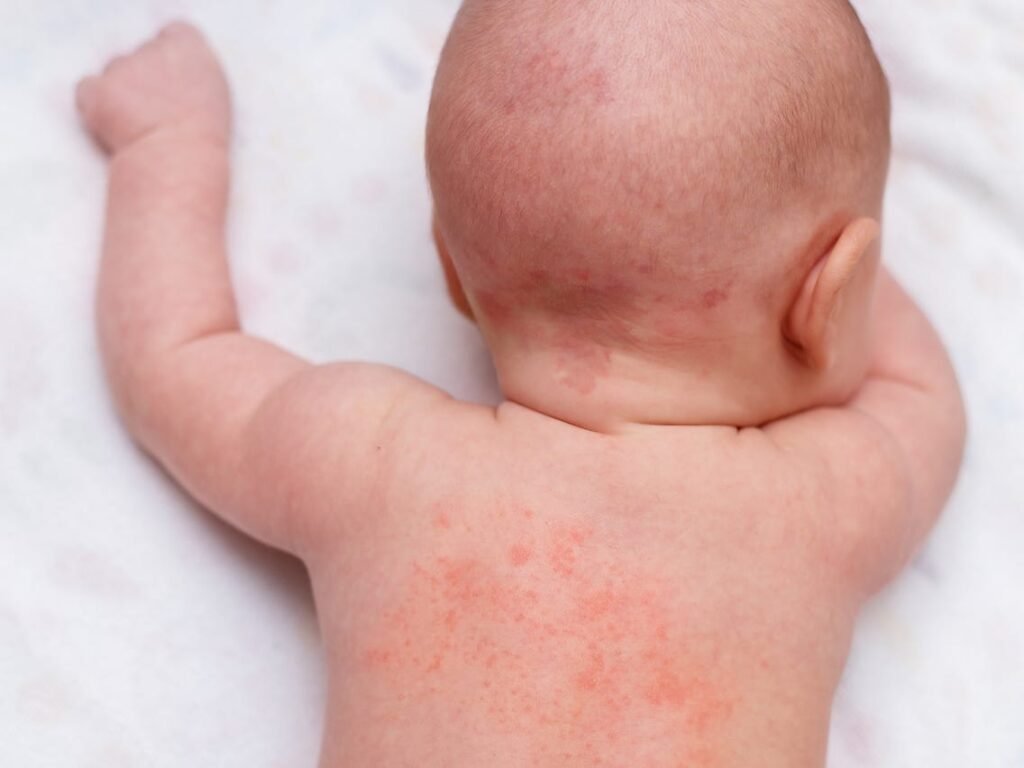
When our first baby came home, I spent more time staring at his skin than I’d like to admit. Peeling ankles, tiny bumps on his cheeks, a flaky patch on his scalp. Every new spot sent me searching online at 2 a.m. Later we learned that our kids have eczema-prone skin, and that taught us a lot about what’s normal, what’s worth a call to the doctor, and which simple habits make the first months easier.
Here’s what I wish someone had told us.
What’s Normal for Newborn Skin
Newborn skin is still adjusting to life outside the womb, so a lot of what looks alarming is completely ordinary.
- Peeling and flaking. Many babies peel in the first couple of weeks, especially on the hands, feet and ankles. Babies born after their due date often peel more. It usually settles on its own.
- Baby acne. Small red or white bumps on the cheeks, nose and forehead are common in the first weeks. Wash gently with plain water and skip scrubbing or lotions on these spots.
- Cradle cap. Yellowish, greasy or crusty scales on the scalp are very common. A gentle wash and a soft brush are usually enough. Don’t pick at the scales.
- Milia. Tiny white dots on the nose and chin are blocked pores. They fade without any help.
Signs Worth Raising With Your Pediatrician
Dry skin and eczema can look similar at first. These are the signs that made us book an appointment:
- Dry, rough or red patches that keep coming back, often on the cheeks, scalp, or the outside of the arms and legs
- Your baby rubbing their face on the sheets or your shoulder, or seeming itchy and unsettled
- Patches that ooze, crust, bleed or look infected
- A rash along with fever, poor feeding or unusual sleepiness (call right away)
You don’t need to diagnose anything yourself. Take photos on good and bad days. They help a lot at appointments, because rashes love to disappear the moment you walk into the office.
A Simple Bath Routine
For sensitive skin, less is usually more.
- Keep baths short. About 5 to 10 minutes is plenty. Many newborns don’t need a bath every day. A few times a week, plus washing the face, hands and diaper area, is often enough.
- Use lukewarm water. Test it with your wrist or elbow. Hot water strips the skin’s natural oils.
- Go easy on soap. Use a small amount of a mild, fragrance-free cleanser only where it’s needed, such as skin folds and the diaper area.
- Pat, don’t rub. Pat your baby dry with a soft towel and leave the skin slightly damp.
Moisturize Within a Few Minutes
This was the biggest change for us. Applying moisturizer within about three minutes of the bath, while the skin is still a little damp, helps lock in water.
- Choose a fragrance-free cream or ointment. Thicker products usually hold moisture better than thin lotions.
- Use enough to cover the skin in a thin, even layer, and smooth it on in the direction of hair growth.
- Moisturize again during the day where the skin looks dry, such as cheeks, hands and behind the knees.
- Try any new product on a small patch first and watch for redness over the next day.
Ask your pediatrician before using anything medicated, and about whether daily moisturizing makes sense for your baby.
Laundry and Household Tips
Your baby’s skin touches everything, so small swaps add up.
- Use a fragrance-free, dye-free detergent for baby’s clothes, bedding and burp cloths, and ideally for your own shirts too. Babies spend a lot of time against your chest.
- Skip fabric softener and dryer sheets.
- Wash new clothes and blankets before the first wear.
- Run an extra rinse cycle if you notice irritation.
Clothing That’s Kind to Skin
- Pick soft, breathable fabrics. Cotton is a reliable choice. Wool and rough synthetics can feel scratchy.
- Cut out tags and look for flat seams.
- Avoid overheating. Sweat is a common trigger for itchy skin. A good rule is to dress your baby in one more layer than you’re wearing, and to check the back of the neck for sweat.
- Keep nails short. File them often. Soft mittens or sleeves with fold-over cuffs can help at night if your baby scratches.
Sleep Space Tips
Safe sleep comes first. Babies sleep on their backs, on a firm, flat surface, with no pillows, blankets or bumpers. Within those rules:
- Keep the room comfortably cool. Around 68 to 72°F (20 to 22°C) works for many families.
- Use a breathable cotton sleep sack instead of loose blankets.
- Wash crib sheets in the same gentle detergent.
- In dry winter months, a cool-mist humidifier can help. Clean it often.
Be Kind to Yourself
Newborn skin changes almost daily, and dry patches don’t mean you’re doing anything wrong. Pick a simple routine you can repeat when you’re tired: a short lukewarm bath, gentle pat-dry, moisturizer within minutes, soft clothes and a cool room. Then give it a couple of weeks before judging how it’s working. Keep notes, take photos, and lean on your pediatrician or health visitor whenever something worries you.
Most of all, enjoy those early cuddles. The flaky ankles pass faster than you’d think.
This article is for general information only and isn’t medical advice. Always check with your pediatrician or health visitor about your baby’s skin.
About the author: Minesh Patel is a dad of kids with eczema-prone skin who writes practical guides for parents navigating sensitive skin. Read his complete guide to baby eczema.